Consistency across office locations does not require every room to have an identical panel in an identical position. It requires clear decisions about what stays the same and what can adapt. The approved logo may be fixed, while panel size and placement respond to each room.
A repeatable specification helps local teams avoid improvising their own colors, spacing, or wording. It also reduces the chance that a reorder starts from an outdated photograph instead of approved artwork.
Define the nonnegotiable brand elements
Record the current logo file, approved colors, exact business name, and permitted lockups. State whether location names or descriptors may be added and who approves them. Include an image showing the intended artwork so the specification is understandable without opening design software.
Keep rejected and obsolete versions outside the active order folder. A file named “final” is not enough when several locations have saved different files with that name. Use a version identifier and date, and name the person responsible for maintaining the master.
Define a small set of adaptable layouts
Instead of letting each office design a sign from scratch, establish a limited family of approved compositions. A horizontal lockup may suit a wide reception wall, while a stacked version may suit a narrow area. Confirm each variation with the brand owner.
State the boundaries of adaptation. A location may choose among approved proportions, but should not stretch the logo, add a new tagline, or change colors to match furniture. If no approved layout works, create an exception process rather than encouraging an undocumented workaround.
Collect a survey from every site
Require a wide room photo, a straight-on wall photo, usable dimensions, and information about planned room changes. Record the wall construction as confirmed or unconfirmed, and leave attachment decisions to the appropriate installer.
Do not assume a specification approved for one building establishes suitability in another. Background color, texture, lighting, and installation conditions can differ. Review the local setting while preserving the common visual identity. Clear-background designs deserve particular attention when wall colors vary across sites.
Separate central and local approvals
Assign central responsibility for artwork and brand decisions. Give the local team responsibility for confirming measurements, room conditions, and access arrangements. Identify who can authorize the final order so a local placement approval is not mistaken for complete production approval.
Use one consolidated checklist for every location. Record exceptions in writing, with a reason and approver. This creates a useful project history and helps the next office understand why one location has a different panel proportion without treating every difference as a new standard.
Build a usable reorder record
Save the approved proof, specification, site photos, order reference, and relevant installation guidance for each location. Keep the master artwork separate from the local placement record. That way a future team can reuse the identity while reassessing the room.
Before a reorder, confirm that the seller’s current options and process still match the intended specification. Product availability can change, and a previous order should be a reference rather than an assumption that every detail remains available indefinitely.
Your planning checklist
- Maintain one current artwork master.
- Define approved layout variations.
- Survey each location independently.
- Archive local proofs and documented exceptions.
Frequently asked questions
Should every office use the same sign dimensions?
Only if the rooms and viewing needs support that choice. Consistent artwork and approved proportions can preserve identity while allowing appropriate size differences.
Who should approve a location-specific sign?
Use a defined split: central brand approval for artwork, local confirmation for site facts, and one named person for final order authorization.
Can we reorder from an old installation photo?
Use the photo as context, but find the approved artwork and specification. A photograph does not reliably establish dimensions, production details, or the current logo version.
Plan your next step
Use Toprak Creative’s B2B page to frame a multi-location inquiry. Include the site count, artwork standard, and room surveys, then confirm current capabilities and quote scope directly.
References
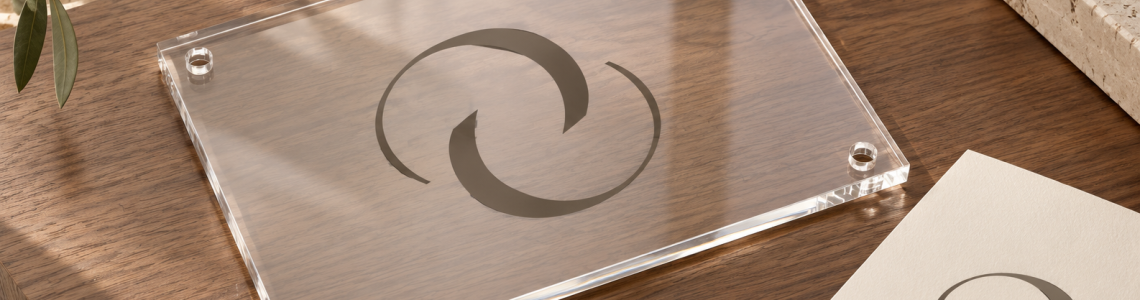
Cover image: AI-generated editorial visualization of a clear acrylic-style logo plaque beside printed artwork on a desk; not a customer product photograph.