
A vision statement describes a future the organization wants to help create. On a wall, that future needs to be understandable without a presenter explaining the slide. The buyer’s challenge is to preserve the approved meaning while creating a display people can read naturally in the space.
Start by deciding whether the sign will introduce the vision to visitors, reinforce it for employees, or support discussion in a leadership room. One display can serve several groups, but its primary reader should guide the wording and placement.
Separate the vision from today’s mission
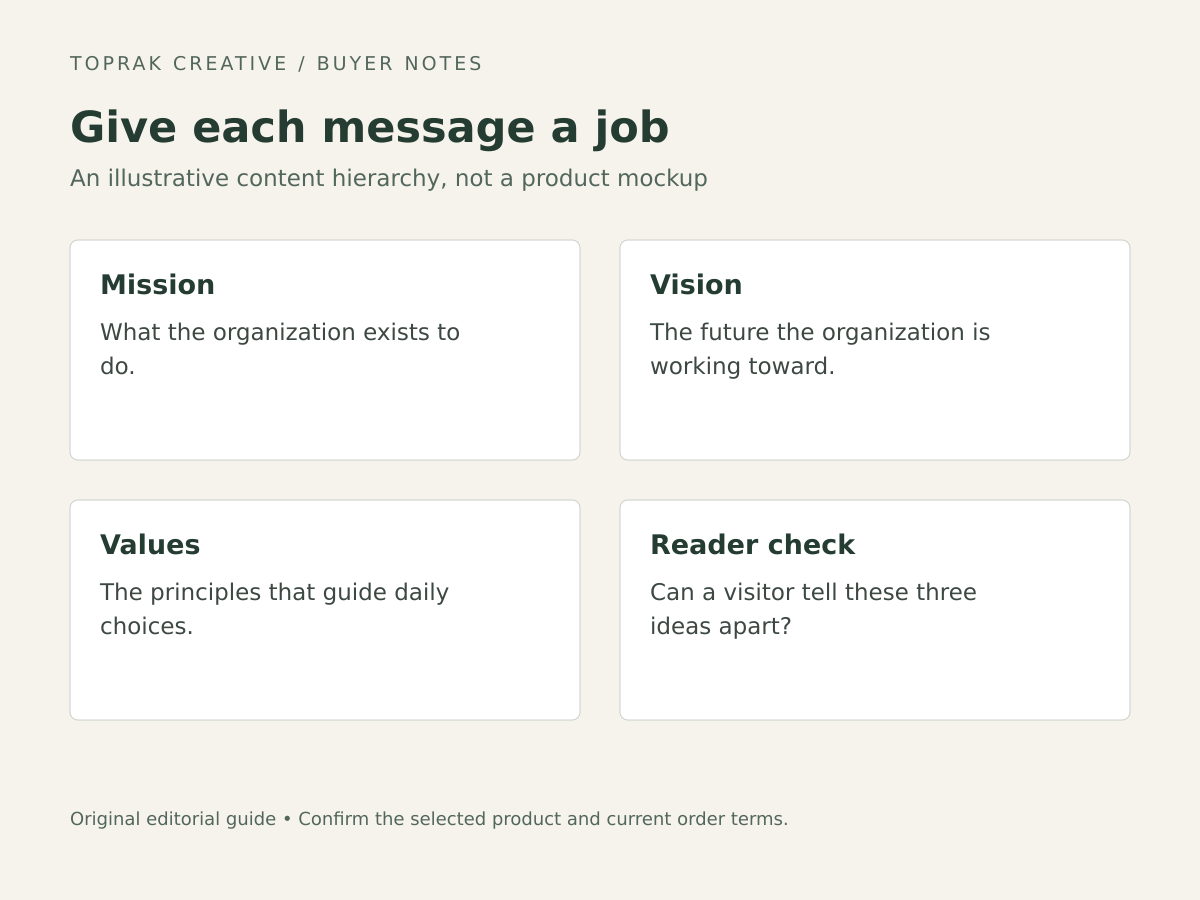
Collect the approved vision and mission before briefing a designer. If both appear on the same wall, label them clearly and give each enough space. Readers should not have to infer which sentence explains current work and which describes a longer-term ambition.
For illustration only, a vision could be, “A future where every neighborhood business can plan with confidence.” This example is not an attributed statement. Avoid adopting generic language simply because it fits neatly on a panel.
Decide how much explanation belongs on the wall
A short vision can stand alone. A broad or unfamiliar statement may need a small explanatory line, but adding background paragraphs often weakens the reading experience. Move detailed strategy, objectives, and progress reports to a separate resource that can be updated more easily.
Make a content inventory with three categories: essential words, helpful context, and material that belongs elsewhere. Have the responsible leader approve any omissions. The sign maker should receive the final wording, not competing versions to reconcile.
Use a location where people can pause
A vision display is a reading object, not merely a piece of color on a wall. Consider the angle of approach, nearby seating, glare from windows, and whether a door or screen will interrupt the view. Photograph the wall during the hours when the space is normally used.
A corridor may suit a very short statement. A discussion area can accommodate more context. Test the actual copy at the intended scale instead of relying on a generic rule about ideal sign size.
Keep the design connected to your brand
Provide approved typefaces, color references, and examples of current internal communications. Describe which elements are mandatory and which allow interpretation. A vision wall can feel distinctive without introducing a second visual identity that is difficult to maintain.
Ask to see the statement without decorative imagery as a comparison. If the plain version communicates better, ornament may be competing with the message. Review the sign alongside nearby displays so that headings and spacing feel intentional together.
Set a review trigger
Vision statements may remain stable for years, but acquisitions, rebrands, or strategy changes can make a display outdated. Record the wording, approval date, sign location, and owner. Tie a review to those business changes rather than assuming someone will notice.
If leadership is still debating the wording, delay the permanent order or ask about a temporary communication approach. Replacing a sign because the organization was not ready is a different problem from choosing the wrong finish.
If you are pairing the two statements, use our mission statement wall sign guide to settle the approved wording before choosing materials.
Frequently asked questions
Should a vision display include a target year?
Include one only if it is part of the approved message. A printed date creates a clear future review point.
Can we combine vision and business targets?
Consider their different update cycles. Frequently changing targets are usually easier to manage outside permanent artwork.
How do we know the text is readable?
Test a full-size layout from the expected viewing positions with people who have not memorized the statement.
Discuss the layout
Bring your approved vision, a wall photograph, and the intended reading distance to the Toprak Creative wall plaque page. Confirm the available format and review process for your particular project.