
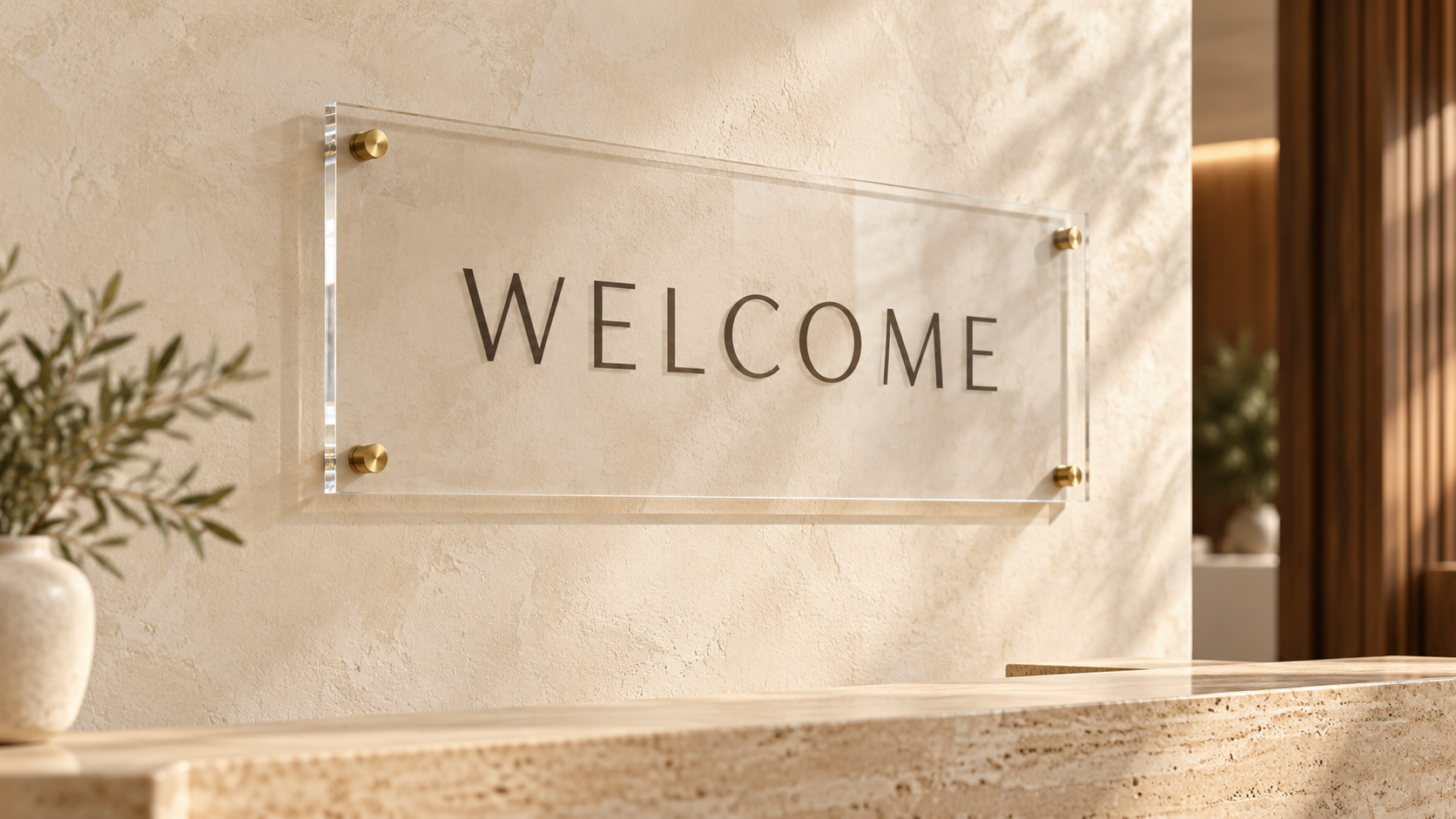
The most obvious wall is not always the most useful place for a reception logo sign. A large blank surface may sit outside a visitor’s natural line of sight. A smaller area near the desk may identify the business sooner. Start by walking the arrival route instead of choosing a position from a photograph alone.
Good placement connects the logo with the moment a visitor needs reassurance that they have reached the right place. It also fits the room when people are using it.
Follow the first-time visitor
Enter through the door someone unfamiliar with the office would use. Note where the reception desk first becomes visible and where a person pauses. Look for an unobstructed position that associates the brand with that destination.
If the route includes several turns, a reception logo cannot solve every navigation question by itself. Keep decorative branding separate from the building’s directional and required signs. Do not hide an existing room identifier or assume a logo panel can replace signage with another purpose.
Choose the visual center deliberately
The center of the wall, the center of the desk, and the center of the visitor’s view may all differ. Decide which relationship matters most. A sign centered over a desk can appear off-center in a wide architectural photograph yet feel balanced from the entrance.
Use straight-on photos and measurements to compare options. Include the desk, nearby doors, and wall lights. Avoid positioning the sign in isolation and then discovering that it crowds a sconce or sits uncomfortably close to the edge of a niche.
Test normal activity and different views
Have someone stand where the receptionist or arriving visitor usually stands. Check whether the logo disappears behind them. Then sit in the waiting area and review the composition from there. A sign that works only in an empty room may not deliver the effect you want during daily use.
Consider recurring photographs or video calls only after the arrival function works. If the wall appears in company photos, leave enough breathing room around the logo for different camera crops. Do not sacrifice a useful visitor view for one perfect promotional angle.
Check light before fixing the position
Observe the proposed location at more than one time of day. Windows, ceiling fixtures, and task lights can create bright areas or reflections that change what visitors see. Photograph the wall with the lights normally used during business hours.
Treat these photos as planning evidence, not a prediction of the exact finished surface. Ask about the proposed material and finish, and identify any appearance questions a screen mockup cannot resolve. If lighting will be changed, review placement again after the new arrangement is known.
Leave room for practical access
Record switches, outlets, access panels, and wall-mounted equipment. Confirm that the placement leaves required access and clearances intact with the people responsible for the space. Have the installer assess the surface and attachment plan separately.
Once the position is agreed, mark its relationship to fixed features in a simple drawing. A note such as “centered above the desk” becomes ambiguous if furniture moves before installation. Measurements tied to the approved room layout make the handoff more reliable.
Your planning checklist
- Walk the first-time visitor route.
- Compare wall and desk centerlines.
- Check seated and occupied-room views.
- Document the approved location with measurements.
Frequently asked questions
Should a logo always go directly behind reception?
It is a useful starting point, not a rule. Compare it with the actual arrival route, available wall space, and visibility when people stand at the desk.
Can I choose placement from a floor plan?
A floor plan helps establish the route, but photos and an on-site viewing check reveal furniture, lighting, and sightlines that the plan may not show.
What if the best wall contains a switch or access panel?
Do not cover it without the appropriate assessment and permission. Explore a different position or size while preserving the wall feature’s intended access.
Plan your next step
Bring a wide room photo when exploring a reception logo sign. Toprak Creative’s current product details can help you discuss the design while your installer confirms site-specific placement and attachment requirements.