A sign proof is easier to review when you stop treating it as a single yes-or-no image. The layout may look attractive while the business name is outdated, the overall dimensions are unclear, or a transparent area is misunderstood. Review each decision separately, then approve the version that documents them together.
Set aside time for a deliberate check. A quick phone-screen glance between meetings is a poor substitute for reading the wording and confirming the measurements.
Read the words before evaluating style
Check the business name against the approved source, character by character. Review punctuation, capitalization, spacing, and any tagline. Read telephone numbers or web addresses in small groups if they are included. Ask a colleague who did not create the design to perform an independent wording check.
Do not let familiarity hide errors. People often recognize what a logo should say rather than noticing what it actually says. Review any location name or professional designation with the responsible person before moving on to design feedback.
Compare the artwork to the master
Place the proof beside the approved logo reference. Check proportions, symbol placement, and whether anything has been omitted or added. Look for unexpected line breaks, missing accents, and lettering that appears different from the original.
If the maker simplified a detail to suit the selected production approach, ask for that change to be identified. A sensible production adjustment still needs brand approval. Avoid approving a broadly similar logo when an exact approved version is available.
Separate measurements from the room image
Confirm the overall panel width and height, then the logo area inside it. Check orientation and any relevant margins or attachment locations shown on the drawing. A room mockup can help with composition, but perspective should not be your only evidence of size.
Compare the dimensions with your wall survey or full-size paper test. If an illustration and dimension label seem inconsistent, ask which controls the order. Resolve the discrepancy in a revised proof instead of approving one version with an informal exception in a separate message.
Ask what the preview cannot show
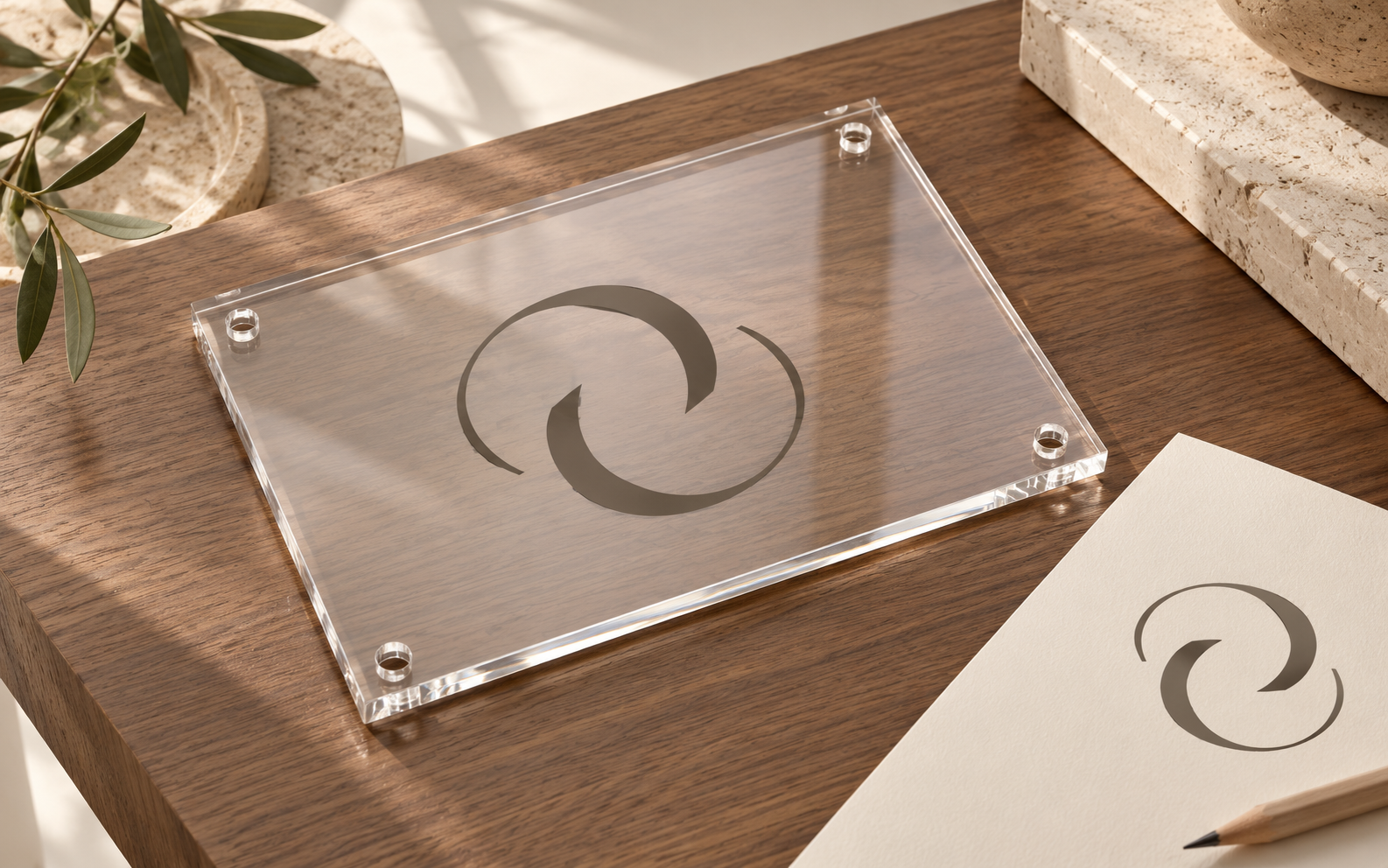
Color, transparency, reflections, and surface appearance may not be represented faithfully on a screen. Ask which elements the proof confirms and which require written specifications or another reference. Clear acrylic layouts deserve particular attention because a white page background can be mistaken for white printing.
Confirm the intended background treatment, artwork color references, and available finish. Do not use the proof to assume unlisted hardware, material thickness, or installation suitability. Those belong in the order specification and the appropriate installation assessment.
Approve one named version
Collect all comments before requesting changes. Make each correction specific: identify the element, describe the required revision, and distinguish mandatory changes from preferences. Review the complete revised proof rather than checking only the corrected area.
When satisfied, record the version identifier and date in your approval. Save the proof, specification, and written approval together. This creates a usable reference for production questions and future reorders, especially when someone else manages the next project.
Your planning checklist
- Check every word against approved copy.
- Compare the logo to the master file.
- Verify dimensions independently of mockups.
- Save the final version and written approval.
Frequently asked questions
Can several people review the proof?
Yes, but use one person to consolidate feedback and provide final approval. Parallel, conflicting replies make it harder to establish which instructions are current.
Does approving a screen proof guarantee an exact color match?
No. Clarify the role of the proof and any available physical color reference. Screens and production conditions should not be treated as interchangeable.
What should I do if the proof has no dimensions?
Request the missing overall and artwork dimensions before approving size. A visually convincing mockup does not establish the manufactured measurements.
Plan your next step
When discussing your reception logo sign, ask what the proof will cover and what remains in the written order specification. A clear review process makes the final decision easier.