
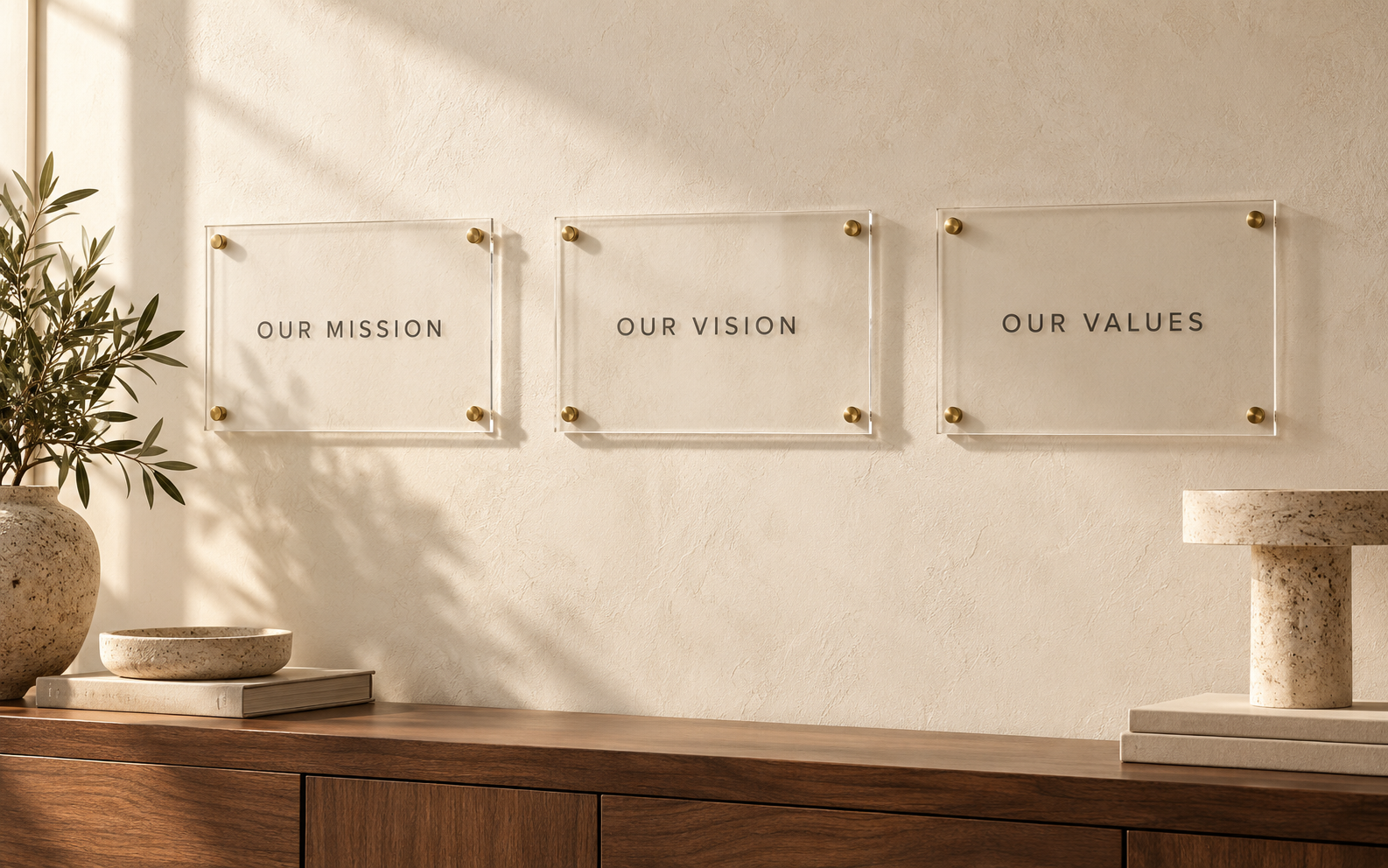
A mission and values wall should live where its audience can actually read it. The most photographed wall is not always the most useful one. Before choosing a location, watch how people move through the office, where they pause, and what other information competes for their attention.
This is a placement guide for a culture display. It is not a substitute for required safety, accessibility, or building signage, which needs separate review against the rules applicable to the site.
Begin with the reader’s route
Map the everyday paths of employees, visitors, and new starters. A display near a team gathering area may support internal conversations, while one near a client meeting space may introduce the organization’s approach. Choose which job matters most for this project.
Stand at the points where people naturally stop. Can they see the full message, or is it blocked by an open door, a monitor, or seating? A wall that looks clear in an empty photograph may be crowded during normal use.
Allow time for the message
A short heading can work in a passing zone. A mission plus several explained values asks for more attention. Put longer copy where a person can pause without obstructing others or feeling they are standing in the way.
Do a simple trial with paper versions. Place the full text temporarily using a method approved for the surface, then ask colleagues to read it during a normal visit to the area. Note where they stand and which lines they overlook.
Observe light instead of guessing
Photograph the candidate wall at different times of day. Consider direct sunlight, reflections from opposite windows, overhead fixtures, and nearby screens. The same artwork can feel different under changing light, especially when the material has a reflective surface.
Share those observations with the supplier. Ask about finish options for the actual setting without assuming a screen preview can reproduce physical reflections. If glare is a serious concern, discuss a sample or another practical verification method.
Coordinate with the room’s other functions
Check whether furniture, display screens, notices, or cleaning equipment regularly occupy the area. Confirm that the proposed installation will not interfere with doors, switches, or existing building information. Facilities should review the wall and the mounting plan before production.
A culture wall does not need to compete with every nearby object. It may work better as one clear element with open space around it. Where several branded signs share a zone, decide which one should be read first.
Document the chosen position
Once a location is approved, photograph it again and mark the proposed sign area. Record usable width and height, the intended orientation, nearby reference points, and any landlord restrictions. Avoid relying on an informal instruction such as “center it above the chairs” when the furniture may move.
Give the installer an approved placement drawing and a contact for questions. Keep the drawing with the sign record so a future repaint or relocation does not erase the original decisions.
Frequently asked questions
Is a hallway a good place for a values wall?
It can be for concise content if people can read it safely and comfortably. Test the real message in the actual space.
Should every office use the same placement?
Use a shared design standard, but assess each site’s layout, light, wall condition, and audience separately.
Can a wall photo replace a site check?
A photo is helpful, but it may not reveal the substrate, obstructions, or changing light. Have the site team confirm those details.
Share the setting with your brief
Explore Toprak Creative’s personalized acrylic wall plaque with a measured wall photograph, approved wording, and a description of who will read the display. Check the selected product options and confirm the number of panels your project requires before ordering.